Locating a dependable pest control service in Detroit requires a clinical approach that addresses the physical vectors of infestation rather than relying on surface sprays. Properties throughout Wayne County experience intense seasonal pressure ranging from subterranean termites emerging near riverfront soils to Norway rats seeking warmth inside historic masonry foundations.

A professional pest control service in Detroit is a targeted remediation and architectural exclusion process that eliminates active insect or vertebrate colonies from residential structures and seals breach points across basements, crawlspaces, and rooflines.
Every service reflects the same meticulous attention to detail, whether it's a single job or a larger pest control sevice project across Detroit.
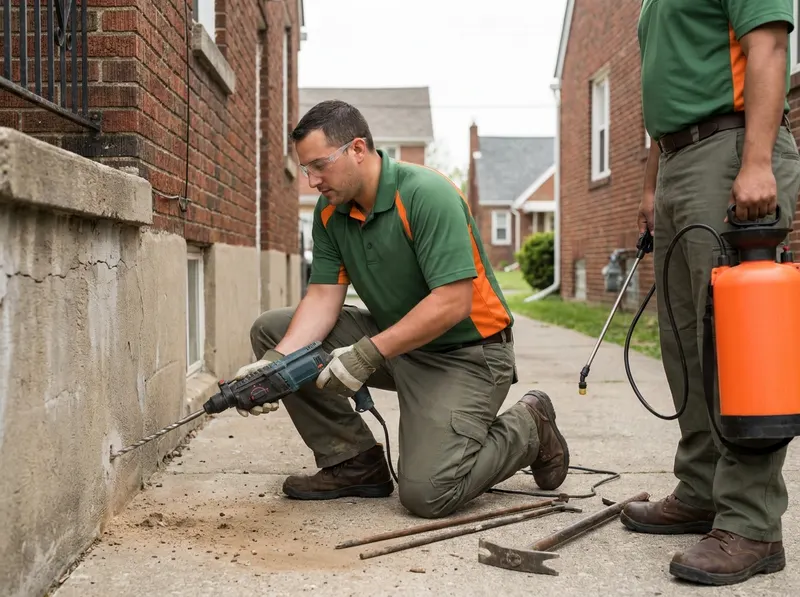
Subterranean termite control targets Reticulitermes flavipes colonies inhabiting damp soil surrounding residential footings. Technicians execute continuous perimeter trenching along foundation walls, saturating backfill soil with non-repellent liquid termiticides at four gallons per ten linear feet. For structures with attached slab patios, driveways, or interior basement slabs, concrete sub-slab drilling delivers termiticides beneath concrete barriers without cracking foundation pads. Supplemental subterranean bait monitoring cartridges installed at ten-foot intervals along exterior property perimeters intercept foraging workers before insects encounter structural sill plates. Direct structural timber injection places localized termiticide foam inside infested joists, subflooring, and wall studs to arrest internal timber consumption immediately. Moisture detection devices identify hidden leaks inside utility chase walls that sustain moisture levels favorable to termite survival.
Get a quote →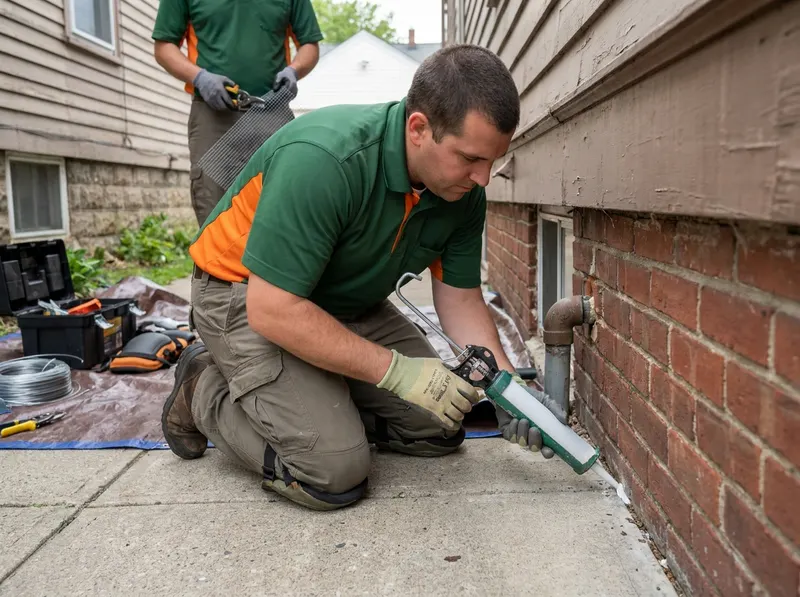
Norway rat and house mouse eradication prioritizes physical exclusion alongside strategic interior mechanical trapping. Technicians conduct visual and thermal diagnostics across perimeter foundation sills, cellar hatch doors, and unsealed masonry joints to map active runs and entry breaches down to one-quarter inch. Technicians seal identified vulnerabilities using rust-resistant 19-gauge galvanized steel mesh, concrete patching compounds, and chew-resistant elastomeric sealants that withstand persistent gnawing pressure. Interior remediation installs closed-box mechanical snap traps inside baseline utility runs, ceiling drops, and mechanical rooms away from living areas. Trapping continues until consecutive multi-day monitoring cycles record zero catch, confirming complete population elimination before entry points receive final permanent closures. Technicians advise property owners on managing exterior waste bins and compost piles to eliminate outdoor foraging attractants.
Get a quote →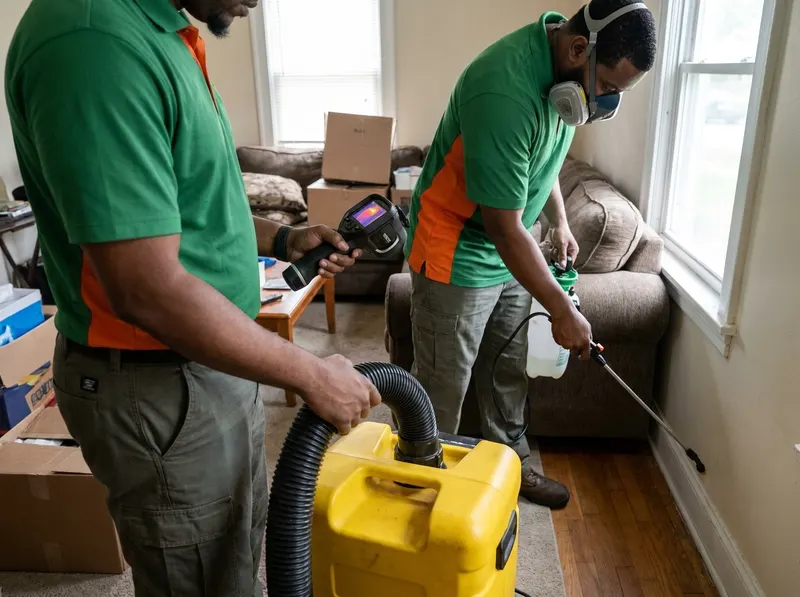
Bed bug eradication eliminates Cimex lectularius colonies through paired thermal intervention and residual application. Technicians apply targeted high-temperature heat sweeps through mobile forced-air heating units, elevating core interior temperatures within affected bedrooms to 125 degrees Fahrenheit for three consecutive hours. This lethal thermal exposure penetrates mattress seams, hollow headboard frames, box springs, and baseboard cavities, denaturing proteins in bed bug eggs, nymphs, and mature adults. High-output heat treatments are paired with targeted micro-dust applications inside electrical wall outlets, plumbing access panels, and baseboard gaps using amorphous silica gel to prevent survivors from escaping into neighboring units. Follow-up structural monitoring with adhesive pitfall monitors confirms absolute eradication across a thirty-day cycle.
Get a quote →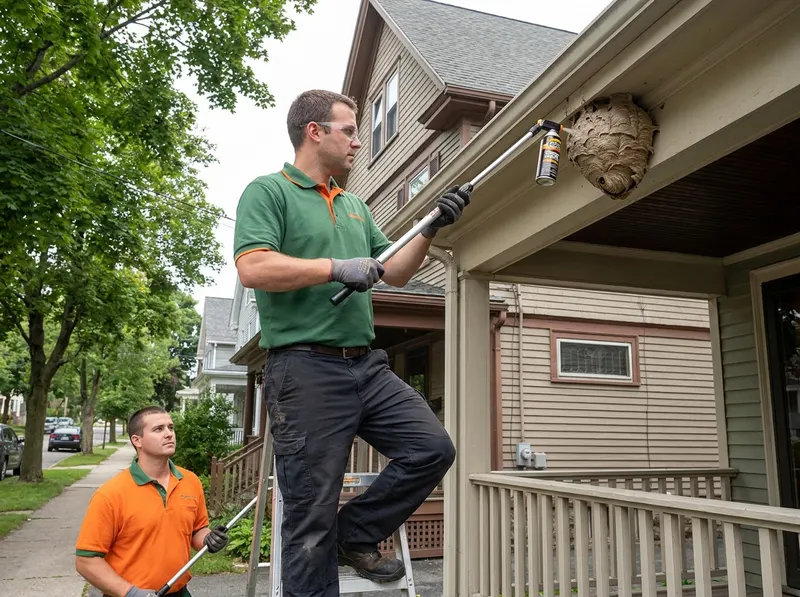
Stinging insect remediation addresses bald-faced hornets, aerial paper wasps, and ground-nesting yellowjackets across residential eaves, roof soffits, and foundation voids. Technicians utilize non-flammable freezing aerosols and rapid-knockdown insecticidal dusts deployed through pressurized injection poles to penetrate paper nest envelopes directly. After neutralizing interior guard insects, technicians remove the complete nest structure, scrape down structural adhesion points, and treat the underlying surface with a repellent barrier to prevent secondary queen recolonization. For yellowjackets nesting inside brick weep holes or wall cavities, technicians inject non-repellent tracking dusts that returning foragers carry into the central brood comb, avoiding exterior wall wallboard cutouts.
Get a quote →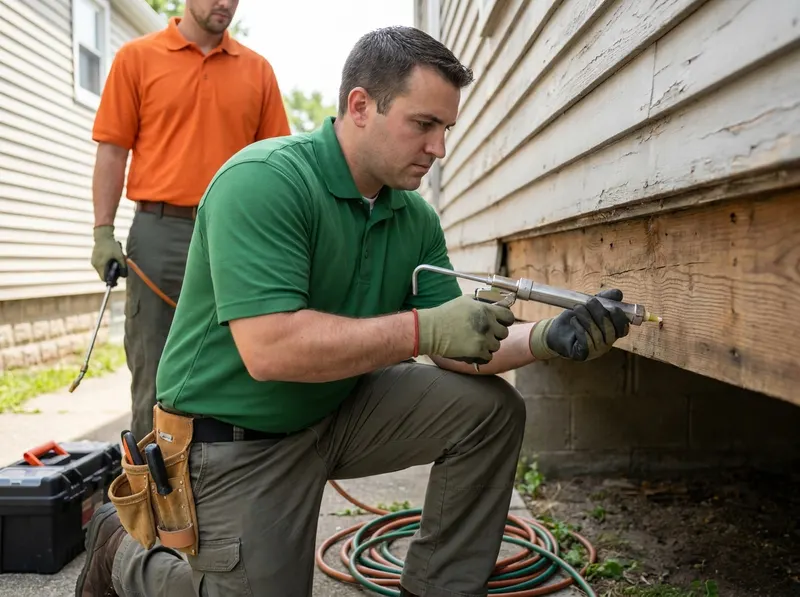
Carpenter ant management focuses on Camponotus pennsylvanicus colonies excavating nesting galleries within structural timbers, porch supports, and damp subflooring. Because carpenter ants do not consume wood but rather discard sawdust frass while hollowing nesting sites, surface sprays fail to reach central brood nests. Technicians locate satellite galleries using acoustic detection and moisture meters along sill plates and bathroom plumbing drops. Treatment uses dual-action non-repellent liquid perimeter applications and microencapsulated sweet or protein matrix baits. Foraging worker ants transport active ingredients directly to hidden parent queens nested inside high-moisture wall cavities or exterior wood stumps. Structural assessments identify damaged soft framing requiring replacement to eliminate persistent attractants.
Get a quote →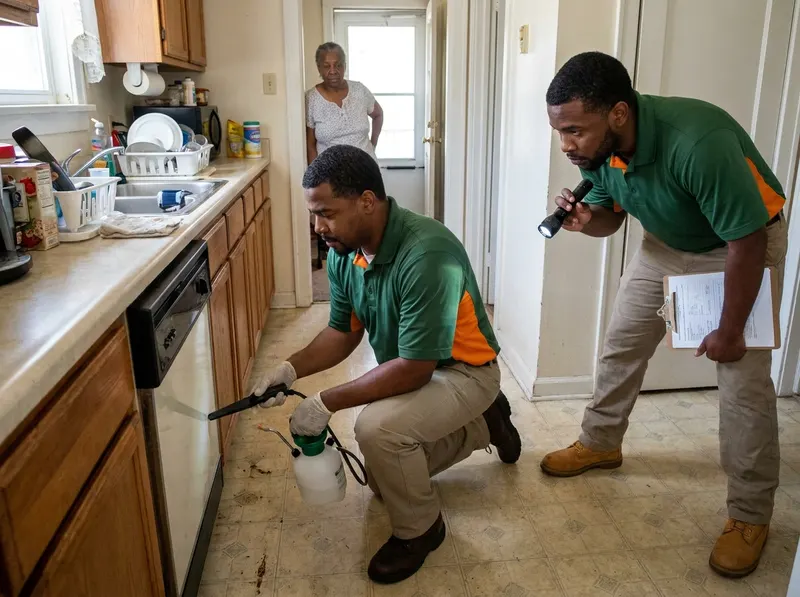
German cockroach elimination targets Blattella germanica populations inhabiting kitchen cabinetry, bathroom plumbing walls, and appliance motor assemblies. The protocol eliminates populations without broad-spectrum aerosol spraying that risks food preparation surface contamination. Technicians deploy high-attractant micro-gel baits formulated with active ingredients that disrupt nervous system transmissions, placing micro-beads along cabinet hinge recesses, behind refrigerator compressor coils, and beneath sink rim joints. Applications are augmented with insect growth regulators that disrupt chitin formation, preventing juvenile nymphs from reaching reproductive maturity and sterilizing adult females. Follow-up adhesive monitoring traps track population decay curves across fourteen-day inspection intervals until zero nymphs or egg cases register.
Get a quote →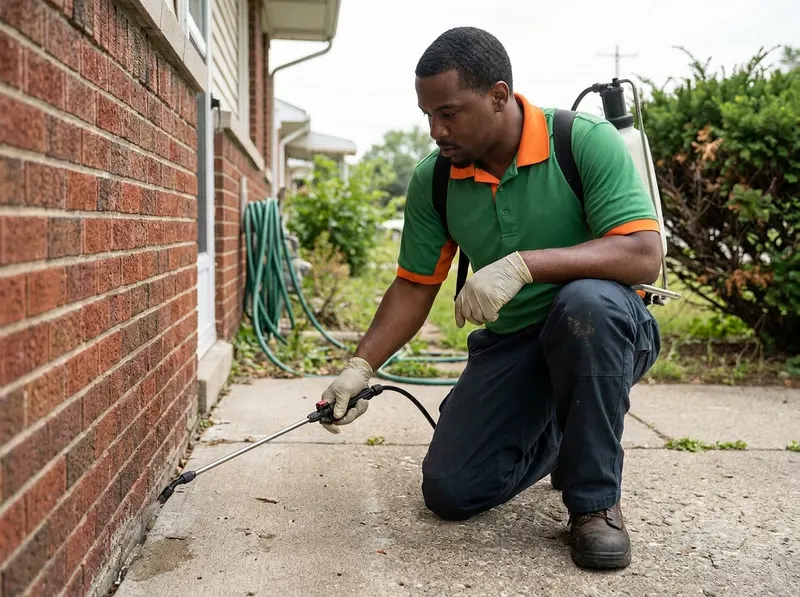
Exterior crawling insect treatments establish a defensive structural buffer against silverfish, centipedes, sowbugs, earwigs, and spiders seeking autumn entry points. Technicians apply a three-foot vertical foundation wash combined with a three-foot horizontal band over adjacent soil and gravel beds using microencapsulated liquid insecticides. The suspended micro-capsules adhere to coarse brick, porous stone, and foundation concrete, resisting degradation from direct sunlight and light rainfall. The formulation releases slowly over ninety days, controlling pests as they contact exterior masonry walls before reaching door thresholds or basement window wells. Weep hole covers, crawlspace vent screens, and window track dusting complete the exterior physical boundary.
Get a quote →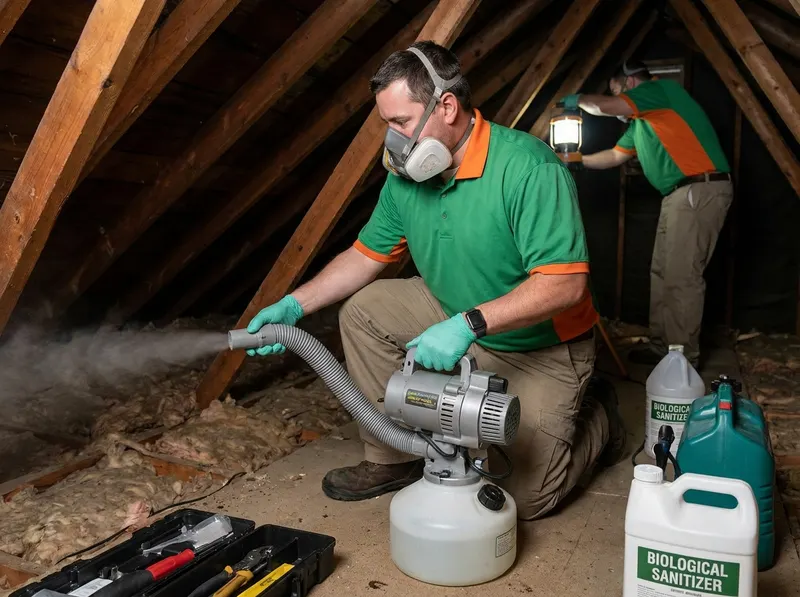
Biological cleanup restores attic and crawlspace environments fouled by sustained rodent or bat occupancy. Technicians eliminate health hazards associated with rodent droppings and urine by operating industrial-grade negative-air HEPA filtration machines to capture airborne pathogens and particulate matter. Technicians mechanically extract soiled cellulose or fiberglass insulation, bag biological debris in heavy-gauge disposal bags, and treat exposed ceiling joists and wall plates with broad-spectrum bio-enzymatic sprays. These enzymatic solutions digest organic proteins, neutralize volatile organic compounds responsible for pheromone tracking, and eliminate dangerous fungal spores. Re-insulation services install clean thermal materials matching modern efficiency standards once structural framing is sanitized.
Get a quote →You get a firm, itemized quote for your pest control sevice before any work begins, no surprises, no pressure.
Careful prep, tidy work, and a full cleanup when we are done. We treat your home and belongings like our own.
The same trusted, background-checked team from the first call to the final check.
Selecting appropriate intervention relies on structural age, target pest biology, and foundation construction. If an infestation involves localized wood-destroying organisms such as eastern subterranean termites inside wet structural joists, choose a targeted non-repellent liquid soil barrier or subterranean bait matrix installed along the foundation perimeter. If the issue involves Norway rats or house mice entering historic brick structures, choose mechanical exclusion over rodenticide bait stations alone.
The trade-off centers on upfront mechanical labor versus recurring chemical maintenance: rodenticides depress population numbers temporarily within feeding zones, whereas physical exclusion via copper mesh, heavy-gauge hardware cloth, and elastomeric sealants closes foundation access permanently at a higher initial installation effort. For seasonal invader management such as German cockroaches or pavement ants, choose microencapsulated non-repellent formulations and targeted insect growth regulators over broad-spectrum synthetic pyrethroids; broad-spectrum options can cause colony budding and scatter insects deeper into interior wall cavities, multiplying eradication timelines. A single-incident treatment fits sudden localized problems such as exposed bald-faced hornet nests or pantry beetles, while bi-annual or quarterly perimeter defense fits historic homes situated on open, moist lots near dense vegetation or older municipal sewer lines.
Homeowners facing subterranean termite activity should evaluate whether trenching disturbs decorative perimeter pavers or landscaping before opting for liquid termiticide barriers versus bait station networks placed every ten to twelve feet around the drip line. When dealing with attic infestations of deer mice or bats, complete seal-up must occur in coordination with one-way exit valves to ensure animals are not entombed within finished wall spaces.
Every project gets a firm, written price after a free on-site visit. Ranges below for orientation.
Tell us about your pest control sevice job and we'll send a clear, written quote, usually the same day. Or just call and talk to a real Detroit pro.
(231) 379-1905
Historic architecture in neighborhoods like Boston-Edison, Indian Village, and Palmer Woods features hand-laid stone foundations, deep fieldstone basements, and aged wood framing where subterranean moisture creates prime entry corridors for carpenter ants and Norway rats. In denser transit and commercial areas around Midtown, Corktown, and Southwest Detroit, shared municipal sewer lines and vintage multi-wythe brickwork provide steady rodent pathways that exploit deteriorated perimeter mortar. Foundation settle lines common in structures built between 1900 and 1935 along Woodward Avenue and Grand River Avenue create entry gaps around basement coal chutes and cast-iron plumbing cleanouts. Soil profiles across the Detroit River basin, extending toward Belle Isle Park and down through Southwest Detroit, maintain high silt and clay content that retains seasonal moisture, encouraging subterranean termites to initiate foraging flights between mid-April and early June. Commercial corridors near Eastern Market and the historic warehouse zones present continuous rodent foraging challenges where exterior garbage compactors demand reinforced metal perimeter seals and industrial exclusion hardware. Furthermore, vintage residential structures with limestone sill foundations require breathable mortar-safe exterior barriers rather than heavy non-porous coatings that can trap moisture and cause winter freeze-thaw masonry spalling. Technicians adapt treatments to address these specific regional architectural variances throughout Wayne County, ensuring historic facades remain undamaged while eliminating interior structural pests.
Free estimates for Detroit & the surrounding area.
 Orelvo Pest Prevention